System Dynamics alla conferenza EURAM2015
Anche quest’anno la conferenza della European Academy of Management (EURAM2015, Varsavia) costituirà un privilegiato momento di incontro tra tutti coloro che si occupano di System Dynamics ed in via più generale anche di modeling & simulation. Vi segnaliamo infatti nuovamente che all’interno del track di Entrepreneurship vi sarà uno stream dedicato alla Simulazione d’Impresa, ove poter presentare i vostri lavori di riferimento sul tema, condotti sia attraverso la SD ma anche attraverso altre metodologie di modellazione e simulazione.
Ricordiamo infine che la deadline per la presentazione dei lavori sarà il 13 Gennaio 2015 e ci riserviamo di inviarvi ulteriori comunicazioni al riguardo (es.: è possibile che tra i due topic possa nascere una sinergia che porterà alla pubblicazione di uno special issue in qualche journal di riferimento in ambito Management e Modeling & Simulation).
 T_03-06: Visionary entrepreneurship in complex worlds: Computer modeling, business games and scenario analysis.
Uncertainty is everywhere. Resistance is futile but simulating scenarios helps!
The phenomenon of uncertainty, how does it affects our daily lives and how does it come to hone our way of organising is the theme of the EURAM 2015 conference to be held in Warsaw. Indeed, contemporary management theory and practice struggle to adequately tackle, rein and perhaps ride uncertainty. To appropriately cope with the theme, two major SIGs, Entrepreneurship and Organisational Behaviour, have decided to sponsor a cross-disciplinary initiative. In both SIGs, topics will address the issue of uncertainty from the point of view of computer modelling and simulation. In the Entrepreneurship SIG, a topic is proposed with the title Visionary entrepreneurship in complex worlds: Computer modelling, business games and scenario analysis and in the Organisational Behaviour a topic is proposed with the title Agent-Based Models and Computer Simulation in Organisational Behaviour. The aim of the two topics is to foster discussions on how theory of complex systems, and the now rich connected panoply of conceptual and theoretical instruments to bridle complexity, may support decision-making in the face of uncertainty. The underpinning idea is that these theoretical and methodological tools may support decision-makers in interpreting uncertainty not only as the visible, and tangible, result of unobservable randomness but as the necessary behaviour of complex socio-economic systems. The two topics, in combination, will try to investigate how different approaches in computer modelling and simulation are, and increasingly will be, necessary tools in the repertoire of management and organisation theorists and practitioners.
We expect that this kind of cross-cutting topic proposals will become an increasingly consolidated practice in the conference. This innovation, we hope, will produce value by creating links and stimulate the interplay among scholars that belong to different SIGs.
Stefano Armenia, Edoardo Mollona, Davide Secchi
 Eleonora Piacenza
 Valerio Ciuffini
 Vanessa Armendariz
 Alberto Stanislao Atzori
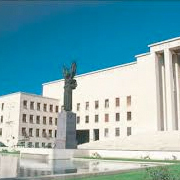 “Sapienza” University
 Andrea Furlan
 Stefano Armenia