The 10th conference of the European Academy of Management (EURAM 2010) took place in Rome from May 19th to May 22nd. As Stefano Armenia had the chance to mention in Albuquerque, this year it was held in Rome, and together with Edoardo Mollona and with the collaboration of Professor Meneguzzo (Tor Vergata University, Faculty of Economics) the System Dynamics Italian Chapter was able to promote the use of the System Dynamics methodology. Besides Edoardo Mollona and Stefano Armenia, many of the usual SD conference attendees were present (among the others: Gianluca Colombo, Martin Kunc, Brian Dangerfield, Kim Warren, Stefan Groesser, Habib Sedehi, etc…). Two specific tracks on applications of Systems Thinking and System Dynamics to management topics were activated. Specifically, there were the following tracks:
– a subtrack of the Public Management track (see track no. 14 – www.euram2010.org/userfiles/file/track%2014%20bis.pdf) named “System thinking & system dynamics in the public sector”. Two papers were presented in this subtrack, coordinated by Stefano Armenia.
– a whole track of the Special Interest Group on Research Methods and Practice named “Strategy Practice and Research: the role of qualitative and quantitative modeling” (track no. 13 – www.euram2010.org/userfiles/file/TRACK%2013%20quatro.pdf). Four papers were presented in this track, coordinated by Edoardo Mollona. This track was quite relevant since it did not only display the normal session (Edoardo Mollona, Gianluca Colombo) but had also a SIG plenary meeting (Brian Dangerfield) a Round Table (Martin Kunc, David Hales, Gianluca Colombo) and a workshop session on the well-known “World Climate Exercise” (Kim Warren, Stefano Armenia, Brian Dangerfield)
Also, an additional special session was organized at the EURAM venue by the SYDIC and the Public Management Group of Professor Marco Meneguzzo, a workshop of presentation of the System Dynamics and System Thinking disciplines to Italian Institutional stakeholders (mainly Public Administrations), in order to promote the SD methodology by presenting some national and international best practice/applications in the fields of economics, sustainable development, environment, health, public management. A round table with institutional stakeholders followed, were the impact of new analysis methods and the space for application of the System Dynamics methodology to public policy testing and decision making in highly dynamic and complex environments was discussed, with the additional precious contributions of Academics, professionals and research associations’ members.
Free materials were distributed during this workshop and are available on the website of the Italian Chapter (SYDIC web: systemdynamics.it ). During this session, two EU-funded projects (7th Framework Programme) were presented:
– MEDEA (www.unibo.it/Portale/Ricerca/Servizi+Docenti+Ricercatori/finanzeuropei/Medea.htm – coordinated by Edoardo Mollona) “Models and their effects on development paths: An ethnographic and comparative approach to knowledge transmission and livelihood strategies”, which explicitly includes a System Dynamics Modelling approach;
– CROSSROAD (crossroad.epu.ntua.gr/), which aims to build a roadmap for ICT research in the field of governance and policy modelling (and which will be supported by the contribution of the results deriving from other FP7 projects in the area of eGovernment and Policy Making), where the System Dynamics Approach has been recognised as a key tool in the field of public policy evaluation and decision making (see for more the following discussion:crossroad.epu.ntua.gr/xblog/2010/05/21/the-future-of-policy-making-and-system-dynamics-towards-augmented-simulation/ )
Overall it was a good success: all sessions were quite well attended and the System Dynamics methodology raised the curiosity of many attendees, researchers, professionals and academics.
 Eleonora Piacenza
 Valerio Ciuffini
 Vanessa Armendariz
 Alberto Stanislao Atzori
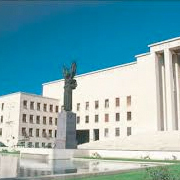 “Sapienza” University
 Andrea Furlan
 Stefano Armenia