The difficulty with sustainability arises from its abstract nature and the fact that these problems have long term horizons. However, the seeds for sustainable development lie already in the lives of millions of people, if we just think that two important facets of sustainable development are:

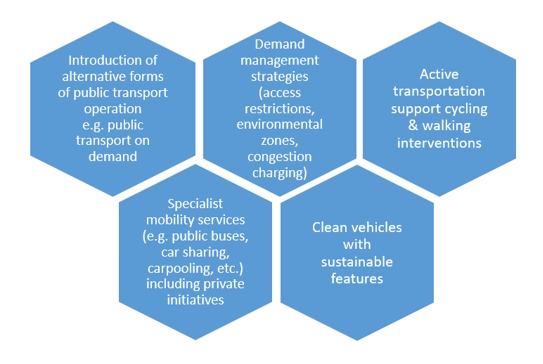
urban transportation sustainability (measures and solutions able to tackle mobility challenges that lead to uncontrolled growth of vehicles and downgrading of quality of life) and
societal metabolism (models that facilitate the description of flows of material and energy within cities and provide a framework to study the interaction between human and natural systems).

Furthermore, sustainable development is among the grand challenges of the next decades. To come closer to achieving that state, the EU is committed to mainstream the Sustainable Development Goals (SDGs) in the European policy framework and current Commission priorities. Moreover, special attention is paid to the means for the achievement of the SDGs, their universal application to all countries and the simultaneous address of the economic, environmental and societal dimensions of sustainability. Thus, there is the need of not only raising awareness, but acquiring a sustainability literacy, in the sense of a functional education process that will provide the necessary skills and motives to cope and contribute with the challenges of sustainable development.
The difficulty with sustainability arises from its abstract nature and the fact that these problems have long term horizons. However, the seeds for sustainable development lie already in the lives of millions of people, if we just think that two important facets of sustainable development are urban transportation sustainability (measures and solutions able to tackle mobility challenges that lead to uncontrolled growth of vehicles and downgrading of quality of life) and societal metabolism (models that facilitate the description of flows of material and energy within cities and provide a framework to study the interaction between human and natural systems).
Already in these aspects lies the implication of a need to fully comprehend the long-term horizon of sustainability problems and its backward relation with the present (how the choice of a transportation means affects the future status of an urban system), as well as the need to translate complex notions into concrete ones (what is the impact of citizens’ consumption habits versus the implications to the local environment).

What is the purpose of SUSTAIN?
It is essential to provide an innovative pedagogy to students of higher education that will be the policy makers of tomorrow. In particular, their education should be exploring sustainability and the complexity among its different dimensions; moreover, it should provide the necessary means for the students to experience processes of complex decision making, sharpen, their clarity of thought, enhance their communication abilities and help them develop critical thinking as well as key competences to address the complexities of sustainable development. This type of education needs to become a process that moves towards being transformed into a more experiential and student-centered way of learning: thus helping students to constantly assess the environment, operating and adapting to it through processes of revision from their frames of reference and provide the appropriate materials to comprehend systemic complexity.
The objective of the SUSTAIN project is to commence and promote sustainable literacy among students of higher education (and young people in general) through an innovative and student-centered education. To achieve this objective, we have designed, developed and implemented a course to be taught in students of higher education; a course hybrid in nature, as it combines game-based learning with an analytical style of education. In detail:
Which goals does the SUSTAIN project target?
By Combining game-based learning with an analytical style of education, SUSTAIN created:
- an illustrative Simulation Environment that makes the definitions of various sustainability aspects more concrete and allows students to experiment in a consequence-free environment, with scenario examples.
- a Board Game, that allows students learning about urbansustainability in a socially relaxed interactive learning environment.
- a Management Course, dealing with various topics like transportation sustainability,societal metabolism, etc. as well aswith decision making under thosecontexts, at the same time formalizing the mathematics neededto makerobust decisions. The course was heavily based on theBoardGame and its scenarios.
Impact
The project is making an impact in three main areas:
– At the EU level, the project provides added value in the efforts of the EC to disseminate the principles of sustainability, while at the same time educatingthe future generation of policy makers to be better equipped to promote and achieve the SDGs. Furthermore, the project takes on the effort of attaining an enhanced education by using and incorporatingthe principles of game-based learning and IC Technologies.
– For the partners of the project, the impact takes the form of a strengthened cooperation and networking of different organizations among different European countries and with different scopes and experiences. At the same time, it strengthens the role of the participating partners in their respective areas, as the project brings cutting-edge research closer to students and citizens.
– Finally, for the students that participate in the project, the new course provides a more student-centered education that informs them on important EU and global issues, and at the same time helps them develop the key competences to deal with complex situations that they will have to face in the near future. The project brings them in touch with the work performed by the partners and connect them with other facets of the European culture.




Intellectual Output 1
Organization name of lead partner for this deliverable: SCR.
This document describes the main definitions of societal metabolism and the formal theoretical models, their advantages and disadvantages and how the theoretical notions of flows of energy and material can be translated to elements of everyday life. It contains links to videos, pictures and interactive exercises that clarify the definitions and elements with the purpose of helping students understand the complexities of modern urban systems.
You can download the files of the Intellectual Output 1 here:
- E-book on societal metabolism
- Intellectual Output 1 presentation
- Instructions for the course on Intellectual Output 1
Intellectual Output 2
Organization name of lead partner for this deliverable: CERTH.
This document describes the definitions of sustainable mobility/transportation, the theoretical models that describe its behaviour and discuss on the state of the art from a theoretical point of view on the research conducted on the issue. It contains videos, pictures and links to describe best and worst practices in the field of sustainable mobility from around the world and how the theoretical models can lead to those behaviours.
You can download the files of the Intellectual Output 2 here:
- E-book on transportation sustainability
- Intellectual Output 2 presentation
- Instructions for the course on Intellectual Output 2
Intellectual Output 3
Organization name of lead partner for this deliverable: University of Macedonia.
This document provides the formal mathematics and foundations of decision making especially in the context of sustainability. The expected impact of this output is to help students understand how the theoretical mathematics of decision making are translated into actual decisions.
You can download the files of the Intellectual Output 3 here:
- E-book on decision making in the context of sustainability
- Intellectual Output 3 presentation 1
- Intellectual Output 3 presentation 2
- Instructions for the course on Intellectual Output 3
Intellectual Output 4
Organization name of lead partner for this deliverable: The Italian Chapter of the System Dynamics Society.
This document explains the methodology used for the development of model, the System Dynamics. Furthermore, the document describes the model, its scope and functionalities, for the right use by students.
You can download the files of the Intellectual Output 4 here:
Intellectual Output 5
Organization name of lead partner for this deliverable: Centre for Systems Solutions.
This document translates the simulation models created as part of O4 to game elements, mechanics and potential playing scenarios. The book aims at showing how abstract notions can be translated to game elements without losing their meaning. Furthermore, it provides a state-of-the-art on overview of board games that deal with sustainability issues, focusing on their advantages and disadvantages that were identified based on the past research on serious games.
You can download the files of the Intellectual Output 5 here:
Intellectual Output 6
Organization name of lead partner for this deliverable: Ergo Ludo Editions.
Let the game begin!
Here you can find all the necessary instructions and files of our game. In this game, each player represents a different Department in a growing city. You will have to face many issues and solve them based with other players’ decisions.
You can download the files of the Intellectual Output 6 here:
Simulator
We have also built a simulator to help you to explore how Urban Sustainability may be effectively managed.
This section describes the Stakeholders who have shown their intention to support the SUSTAIN project signing a manifestation of interest. By signing the MOI you will have access to all the SUSTAIN course materials and you will have permission to download the game simulator when it will be ready.
Here you can find who have already signed our Manifestation of Interest:
-
-
- Desislave Ilieva, Bulgarian Sport for All Federation, Bulgaria.
- Professor Basil Manos, Aristotle University of Thessaloniki, Greece.
- Professor Bertrand Mareschal, Université Libre de Bruxelles, Belgium.
- Professor Federico Barnabe, Department of Business and Law, University of Siena, Italy.
- Professor George Botzoris, Democritus Thrace University, Greece.
- Professor Mirko Savic, University of Novi Sad, Serbia.
- Professor Pascale Zarate, Toulouse 1 Capitole University, France.
- Professor Thomas Bournaris, Aristotle University of Thessaloniki, Greece.
- Professor Ugo Bardi Università degli Studi di Firenze, Italy.
- Professor Vincenzo Scotti, Link Campus University, Italy.
- Professor Yannis Tyrinopoulos, University of West Attica, Greece.
- Professor Matteo Zaccarini, University of Bologna, Italy.
- Professor Elena Claire Ricci, University of Verona, Italy.
-
Social
[wptb id=4026]
 Eleonora Piacenza
 Valerio Ciuffini
 Vanessa Armendariz
 Alberto Stanislao Atzori
 “Sapienza” University
 Andrea Furlan
 Stefano Armenia