Vision
We are once again proud to announce that SYDIC is organizing a new edition of its Training Schools, this time a Summer School, that will see five days fully dedicated to the application of the System Dynamics modelling approach to the analysis of complex systems (biology, ecology, economics, engineering, …).
In June, SYDIC will be organizing the “How to apply holistic modeling in your field through System Dynamics” at the Department of Agricultural Sciences, University of Naples Federico II. The aim of this Summer School is to provide scholars, researchers, educators, practitioners and professionals, from different fields or backgrounds, with the theory, methodology and tools of System Dynamics so to model complex systems and so to be able to identify systemic solutions.
The School will start on June 16th 2025 (after lunch) and will end on June 20th 2025 (before lunchtime), see the Programme section for details
The Summer School will be characterized by the following three main training activities:
-
- Introduction to System Dynamics: introduction to casual loop diagrams, the language and tools of SD, exercises on the use of simple SD models into applied sciences (from biology to economics)
-
- Presentation of case studies: several case studies on the use of SD in the biological, ecological, agricultural, engineering and economic fields will be presented by the expert SD educators invited by the School. Other methodological approaches integrated with SD (agent-based model, integration of GIS and SD territorial systems) will also be presented
-
- Realization of SD models in an applied field: students will be divided into groups and will be asked to design, implement and present their case study model in a field of their choice.
The approach of this Summer School and the methodology applied to the activities that are planned during the five days will be collaborative and dynamic. The models developed by the participants will be implemented through the open-access simulation platform Silico®.
In addition, sessions will also be organized for group practice through simulations from the Systems Thinking Playbook (Booth Sweeney, Meadows) which focuses on systems thinking skills.
In order to create a model applied to the students’ fields of interest, the participants, on a voluntary basis, will be invited to send the organizers a brief description of a problem that they would like to analyse through the system dynamics approach.
In order to be able to undertake a stimulating and dynamic path, the practical exercises will be developed in mixed working groups. In this way, the Summer School will give participants the opportunity to share very different experiences and perspectives and offer a broader look at the proposed topics.
Certification
At the end of the Summer School, participants will be issued a certificate from the doctoral school of “Sustainable Agricultural and Forestry Systems and Food Security” of the University of Naples Federico II or from the doctoral school of “Food Science” of the University of Naples Federico II, and 6 CFU/ECTS will be recognized for the attendance.
Organizing committee
Invited speaker
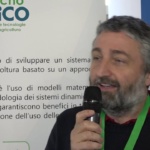
Francesco Giannino
Professor of numerical analysis
Department of Agriculture
Universita’ degli studi di Napoli
Federico II
Speaker
Organizing committee
Mauro Moreno
Researcher and science communicator
PhD Dipartimento di Agraria
Università di Napoli Federico II
Organizing committee
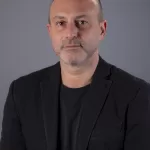
Franco Fassio

Stefano Armenia
Professor
Disciplinary scientific area
IUL Università telematica degli studi
Speaker
Organizing committee
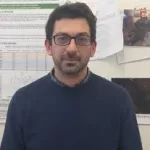
Antonio Gallo
Full Professor
Faculty of Agricultural, Food, and Environmental Sciences
Università Cattolica del Sacro Cuore
Speaker
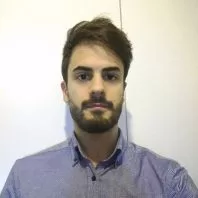
Alessandro Pompei
Federico Barnabé
Full Professor
Department of Business and Legal Studies
Università degli studi di Siena
Speaker
Organizing committee

Stefania Migliavacca
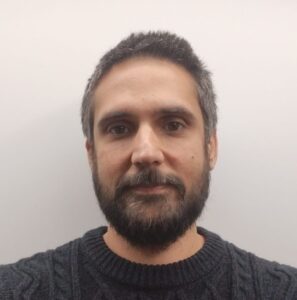
Fabrizio Cartenì
Researcher in environmental and applied botany
Department of Agriculture
Universita’ degli studi di Napoli
Federico II
Speaker
Organizing committee
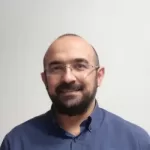
Alberto Atzori
Associate Professor
Department of Agriculture
UNISS Università degli studi di Sassari
Speaker
Organizing committee
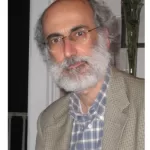
Stefano Mazzoleni
Professor of Environmental and Applied Botany
Department of Agriculture
University of Naples Federico II
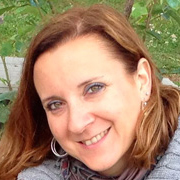 Eleonora Piacenza
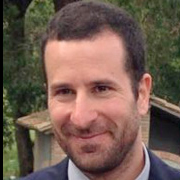 Valerio Ciuffini
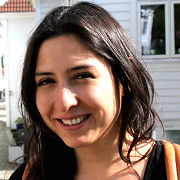 Vanessa Armendariz
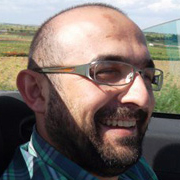 Alberto Stanislao Atzori
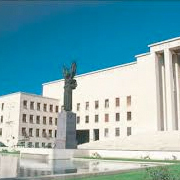 “Sapienza” University
 Andrea Furlan
 Stefano Armenia