Summer School 2017
Lake Como School of Advanced Studies
September 11 – 15 , 2017
Scenario Analysis and Sustainable Policy Modelling
with Computer Simulation


Scientific Proposal
The challenges in governing (both public and private institutions) has evolved in the last 30 years. The world has become increasingly interconnected, complex, and fast-evolving, so that consequences of individual behaviours and policy choices are more unpredictable than before and timely decision-making is necessary to ensure positive outcomes. As policy science advances theories and models to deal with the complexity of today’s decision-making, the goal of the school is to provide scholars in social sciences with instruments to understand the root causes of problems and to develop models allow intuitive and user-friendly assessment of the sustainability and the long-term robustness of policies. More precisely the school will focus on modelling techniques that allow the building of simulation models to be used to support policy-making in complex decision-making settings. In particular, the aim of the school is to make participants able to design and to build computer simulation models to test effectiveness of policies and to perform long-term scenario analysis.
School Coordinators:
Dr. Ing. Stefano Armenia
System Dynamics Italian Chapter
Prof. Edoardo Mollona,
Department of Computer Science and Engineering
Università degli Studi di Bologna
Programme:
Monday 11
Tuesday 12
Wednesday 13
Thursday 14
Friday 15
Speakers

Stefano Armenia
Università La Sapienza - Roma, Italy
Stefano Armenia (Rome, Italy – 1971) is a Research Fellow in the Analysis of Dynamical Systems at DIAG Sapienza, the Department of Computer, Control and Business Engineering “Antonio Ruberti”, “Sapienza” University of Rome. He has a degree in Computer Engineering, Industrial Automation & Control Systems, a Ph.D. in Business Engineering and a Master in Management and Business Administration. He is member of the System Dynamics International Society (SDS) since 2002, President of SYDIC (the Italian Network of the SDS) since 2011 and member of the SDS Policy Council since 2014. His research interests deal with the analysis of complex systems dynamics in many fields: logistics and transportation, finance, technological innovation, policy modeling and assessment of impacts of innovation and new technologies on organizational processes.

Pål Davidsen
System Dynamics at the University of Bergen, Norway
Adjunct Professor of Economics, Virginia Western Community College, U.S.A. Professor, Monetary Policy, ISM University of Management & Economics, Lithuania Professor, Economic Dynamics, National University of Kyiv-Mohyla Academy, Ukraine.
His current projects include collaboration with Ukrainian economists to build system dynamics modeling capacity at the National University of Kiev-Mohyla Academy, plus development of a money supply model with economists at Ukraine’s central bank. In collaboration with one of his students and an economist at Lithuania’s central bank, he is working on a multi-industry system dynamics model of price dynamics in Europe. His latest economics journal article is “Teaching Endogenous Money with Systems Thinking and Simulation Tools.” He also seeks to improve the practical value of system dynamics models by adding implementation insights gleaned from the public policy literature. Two recent book chapters on that topic are “Model-based Policy Design that Takes Implementation Seriously” and “Disappointing Outcomes: Can Implementation Modeling Help?”. Wheat is past-president of the economics chapter of the International System Dynamics Society. He served as Associate Editor of the System Dynamics Review and on the Advisory Board of the International Journal of Pluralism and Economics Education. He has conducted guest lectures in Africa, Europe, and North and South.

David Wheat
Professor of System Dynamics, University of Bergen, Norway
Professor in System Dynamics at the University of Bergen, Norway. He holds Mag. Art. degree in System Dynamics from the University of Bergen. He has served twice as a Visiting Scholar at MIT, Mass, USA, as Associate Chair of the Pre-College Education Project with Professor Jay W. Forrester and as Adjunct Professor at Chalmers, the University of Karlstad, Sweden, and the Naval Academy in Bergen. He is the founder of the System Dynamics Group and of the Educational Information Science and technology Programme at the University of Bergen and is co-founder of the European Masters Programme in System Dynamics. He has served as President of the System Dynamics Society and as member of the editorial board of the System Dynamics Review and is currently Vice president of Publications in the System Dynamics Society from which he has received the Outstanding Service Award.

Francesco Giannino
Università degli Studi di Napoli Federico II, Italy
Dr. Francesco Giannino is researcher in mathematics in the Department of Agriculture Sciences at the University of Naples Federico II. Dr. Giannino’s research interest is mainly devoted to the design, development and analysis of mathematical models in biology. Methodological and computational aspects have been considered for several different applications.
In particular:
Model design, implementation and analysis in complex biological systems. Different mathematical modelling approaches can be used to simulate biological and ecological process. Dr. Giannino uses system dynamics and individual-based approaches to describe vegetation dynamics, plant-soil processes, and movement of predators.
Integration of mathematical tool at different scale (theoretical and practical aspects). The effective study of complex biological systems needs the integration of modeling approaches based on different mathematical operators (ODE, PDE, logic functions), possibly using different languages and tools (Matlab, C + +, GIS, System Dynamic tools, …).
Douglas McKELVIE
U.K.
Douglas McKelvie is the Edinburgh-based Partner of The Symmetric Partnership, a UK consultancy that uses simulation to support strategic planning in health and social services. During more than 20 years in social work, regulation of social work qualifications at UK level, and workforce development, Douglas developed an interest in the use of modelling and simulation, initially to support workforce planning. For the past 15 years, he has built simulations for a wide range of organisations across the UK, including government departments, NHS bodies, and local authorities. He mostly uses System Dynamics, in a group model building context, an approach that takes a ‘whole system’ view of complex problems, such as are found in health and social care integration, where services span agency and functional boundaries. Models include delayed discharges, winter pressures planning, commissioning and capacity planning, workforce planning, economic impact analysis, public health / population level issues, mental health, and specific conditions, such as dementia. Douglas currently serves on the UK Policy Council of the System Dynamics Society and is the author of a number of papers on the use of simulation in health, social care, and related human services.

Edoardo Mollona
Università di Bologna, Italy
Edoardo Mollona graduated cum laude in Strategic Management at Bocconi University in Milan (Italy) and received a PhD degree in Strategic Management/Decision Sciences at the London Business School. He is currently full professor in the Department of Computer Science and Engineering (DISI) at the University of Bologna where he teaches Corporate Strategy and Strategic Modelling. Edoardo was formerly President of SYDIC (the Italian Network of the SDS). His research interests focus on the application of modeling and simulation techniques to strategic management, stakeholder theory and organizational theory. In particular, Edoardo Mollona conducts research on the evolution and strategic change in large organizations, and on the interplay between corporate strategy and socio-political processes at work in society.

Rocco Scolozzi
Università di Trento, Italy
PhD in Environmental Engineering, expert at spatial decision support system, future studies, and system dynamics; specialized in ecosystem services assessment and participatory methods for natural resource management. Currently, working in partnership with EURAC (Bolzano, Italy), and as research fellow with Department of Civil, Environmental and Mechanical Engineering and Department of Sociology and Social Research (University of Trento, Italy). With prof. R. Poli (UNESCO Chair in Anticipatory Systems) founder of -skopia Anticipation Services (r) an innovative start up company of Trento University (www.skopia.it).

Nuno Videira
PhD in Environmental Engineering from Universidade NOVA de Lisboa, Spain
Nuno Videira holds a PhD in Environmental Engineering from Universidade NOVA de Lisboa, a MPhil in System Dynamics from the University of Bergen, and a BSc (5 years) in Environmental Engineering from the Faculty of Sciences and Technology (FCT) of NOVA. He is Assistant Professor at FCT NOVA, teaching on environmental management, ecological economics, participatory methods, and integrative modelling for MSc and PhD level programmes, including the European Master in System Dynamics Programme. He develops research at CENSE – Centre for Environmental and Sustainability Research of FCT NOVA. His research interests include participatory system dynamics modelling approaches for stakeholder engagement in environmental and sustainability decisions, supporting problem scoping and policy analysis processes, dealing with various issues, such as, ecosystem services and biodiversity conservation, water management, and sustainable consumption. He has developed extensive experience in the implementation of collaborative processes for the co-creation of models with broad stakeholder groups, having published widely on the topic. Currently, he is member of the Policy Council of the International System Dynamics Society and the Board of the European Society for Ecological Economics.

Venue - Villa del Grumello
Fondazione Alessandro Volta
Via per Cernobbio 11, 22100 Como, ITALY
 Eleonora Piacenza
 Valerio Ciuffini
 Vanessa Armendariz
 Alberto Stanislao Atzori
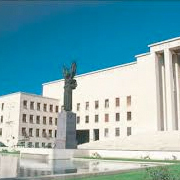 “Sapienza” University
 Andrea Furlan
 Stefano Armenia